ISO Certification in the UAE: The Complete Guide
Wiki Article
ISO Certification For Abu Dhabi: A Practical Guide For Local Companies
The business environment of Abu Dhabi carries specific pressures around ISO certification. It is heavily shaped by the region's high concentration of government organizations, major industrial players, and strict tendering requirements. Local companies that have to go through an ISO certification process for the very first time understanding the particular challenges specific to Abu Dhabi makes the process significantly lesser daunting.Government and Semi-Government tenders set the pace
The majority of Dubai's economy relies on big industrial players, many that have formally endorsed ISO certification as an essential prequalification requirement for contractors and suppliers. This means that the option to be certified is frequently driven less by personal ambition and more driven by the practical reality of which contract a business is hoping to keep in the running for certification.
In the Energy and Industrial sectors, there are Particular Expectations
Abu Dhabi's industry and energy sectors have particularly strict expectations in terms of environmental and safety, given the scale as well as the high risk associated with operating in these areas. Companies that offer services to this environment, even indirectly, often observe that the certification requirements of their clients directly are stricter than the baseline required standards, reflecting their own internal system of managing risk.
Choose a standard that matches your actual business needs
A common early mistake is seeking certification because one of your competitors has it, without first mapping out which certification corresponds to the actual risk profile and client expectations. The requirements of a logistics company look entirely different from an organization that manages facilities, and beginning with a clear evaluation of what the clients and tenders actually require saves considerable time later.
The Gap Assessment Stage Is worthy of consideration
Before the formal implementation process begins, a proper gap assessment by comparing the relevant standard to determine how much practice adheres to the standard and where some work is needed. Doing this too quickly or skipping it leads to a longer stage of implementation that costs more later on because the gaps that could have been identified early rather than surfacing unexpectedly during the audit during the audit.
Documentation Requirements Are More Manageable than They Sound
Many new applicants believe that ISO the requirements for documentation will be overpowering, but modern-day management system specifications are less prescriptive in their approach to paperwork in comparison to older standards, insisting instead on showing that processes are actually adhered to rather than being merely documented. A pragmatic approach towards documentation that is based on what the business will want to document generally leads to a system that's actually used as opposed to one that's solely for the purpose of audit.
Local Support Options Have Expanded Definitively
Abu Dhabi now has a significantly larger pool of certified and consultants with local sector expertise than it had 5 years ago, thus reducing the need to count solely on multinational companies without a local background. This local expansion has generally improved the speed of process and more in tune with the specific requirements of operating within the region.
To maintain certification, you must make a continuing commitment.
It's not a singular achievement but an ongoing commitment involving regular audits of surveillance, usually annually, in order to prove that the management system is properly maintained. Companies that take the initial certificate as the "finish line" rather than a starting point usually struggle to pass the future audits, while those who incorporate the requirements of the standard into everyday operations will experience much less difficulty recertification.
Businesses in Free Zones Face Specific Considerations
Businesses that operate from Abu Dhabi's numerous free zones may assume that the requirements for certification differ when compared to mainland businesses, however, the basic international standards are identical regardless of the jurisdiction. The only difference is the specific client and tender requirements in each free zone's tenant system, which is important to discuss directly with authorities of the free zone or prospective customers, rather then assuming that you can find a universal solution to this issue.
Realistic Budgeting for the Whole Process
The first-time applicants often budget just to cover the cost of external audit which is usually not considered, leaving out the internal investment in time, consultant costs, and any operating changes required to bridge real gaps discovered during assessment. An effective budget accounts for the entire process from beginning of assessment to the issue date, rather than only the invoice for the final audit, in order to avoid being surprised later on in the process.
Timing Certification for Business Cycles
Businesses that have clear seasonal peaks which are typical in the construction and related industries, usually are able to schedule the more demanding execution and audit phases during times of less activity, instead of trying to execute an audit project during peak operational demands. The certification authorities in Abu Dhabi generally have flexibility in scheduling, and adjusting timing preferences early in the process is likely to ensure a more seamless experience for everyone involved.
Learn from businesses that have been through it before
Connecting directly to other Abu Dhabi businesses in a similar sector who have already gone through certification often surfaces valuable insights that the certification body or consultant would be able to provide without asking, from realistic timelines, to elements of the audit are likely to catch first-time applicants off to their feet. This kind of feedback from peers is extremely valuable and worth making sure to look for before signing to a particular service or timeframe.
Working With Government Liaison Requirements
Companies that are seeking certification specifically to qualify for government tenders in Abu Dhabi should confirm exactly which certification scope and standard version a specific tender needs and, as the requirements often refer to specific editions or additional local requirements that go beyond the base international standard. Confirming this detail directly with the tendering authority prior starting the process of certification eliminates any risk of being certified against the wrong scope entirely.
To Abu Dhabi businesses approaching certification for the first time, the success usually relies on selecting the most appropriate standards for operational realities, taking the stage of preparation seriously and consider certification as an ongoing operational discipline instead of simply a checkbox to tick once and forget. Abu Dhabi businesses that approach certification with this level of planning, instead of viewing it as a late-night tender requirement that must be rushed through, usually end up having a stronger, more actual-looking management system by the conclusion of the process. All of this can be taken on by oneself, since Abu Dhabi's growing base of skilled local consultants as well as certification bodies mean that truly knowledgeable assistance is more readily available than it has been at any previous point. Utilizing the growing local knowledge base makes the whole process considerably easier than it was in the past. Follow the top rated ISO 9001 Certification for blog info.
ISO 14001 Certification The Reasons Environmental Management Is Important For Uae Companies
Environmental concerns have evolved from becoming a major business issue across the UAE in part due to country-wide sustainability pledges, and partly by growing client and regulatory expectations. ISO 14001, the international standard for environmental management systems is a natural solution when companies want to demonstrate authentic, well-structured environmental responsibility in addition to good goals alone.What ISO 14001 Actually Requires
The standard calls on businesses to determine the environmental impacts of their operations, know what impact they have and put measures in place to control as well as reduce negative effects over time. This might mean anything from managing waste and emissions within a manufacturing facility to cutting down on energy consumption and paper use in an office-based service business, since it is proportional to whatever the company's actual environmental footprint is.
Alignment With UAE National Sustainability Goals
The UAE's broader national commitments on sustainability and net zero goals have created a real institutional momentum to improve environmental management. ISO 14001 certification gives individual companies a way to show their alignment with these wider goals. The alignment of ISO 14001 is increasingly important for businesses bidding on government or semi-government contracts, as environmental credibility is now becoming an evident criterion for evaluation.
Industries - Where it's important
Construction, manufacturing oil and gas and logistics tend to face the greatest environmental scrutiny, due to the sheer size of their operations. However, companies that provide services are increasingly seeking certification as well, both for tender eligibility as well as real cost savings by utilizing more efficient resource use. Even companies that have a thin environmental footprint, often the method of arranging their operations uncovers unexpected efficiency gains.
The Legal Compliance Angle
A significant part of ISO 14001 involves identifying and the monitoring of compliance with applicable environmental legislation and regulatory requirements, which in the UAE is a broad area that includes federal environmental laws and regulations that are specific to emirates. Certified companies generally are more clear and have a more current view of their compliance obligations than non-certified competitors, decreasing the chance of accidental violation and the resulting penalties.
Integration with Other Management Systems
Many UAE companies that want to pursue ISO 14001 already hold or are in the process of obtaining ISO 9001, and the two standards share enough structural similarity that using a unified management approach that covers both can be more efficient that treating them as distinct projects. This unified approach will reduce duplicate paperwork and auditing efforts significantly when businesses manage multiple certifications.
What the Certification Process is Like
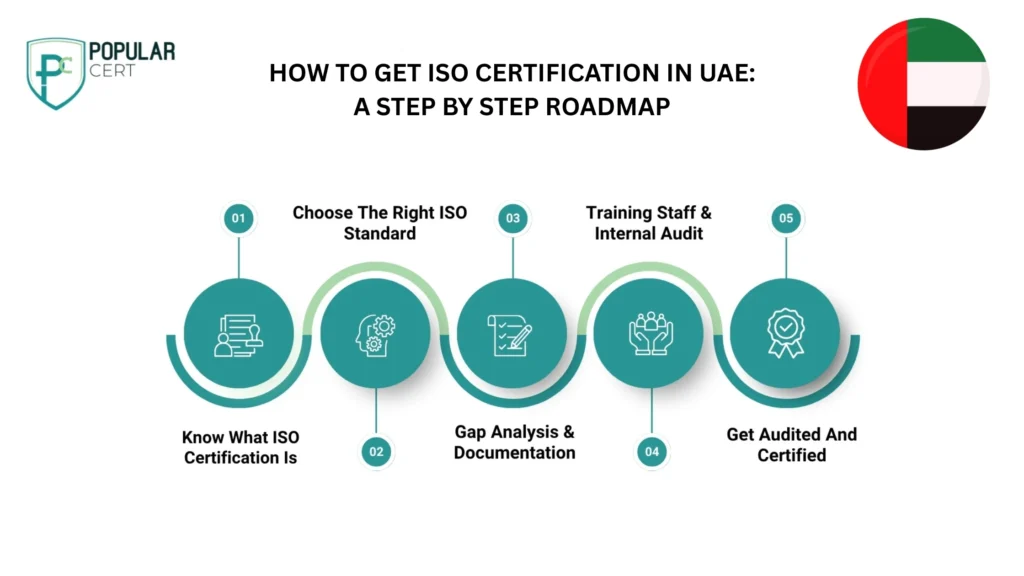
Similar to other management system standards Certification follows a predetermined plan: a preliminary gap evaluation, followed by the implementation of the necessary procedures and documentation, internally audited, followed by an external audit conducted by an accredited certification body. Continuous surveillance audits, which are typically annually, prove that the environmental management system is being maintained instead of expiring after the initial certificate is issued.
Real Business Benefits that Go Beyond the Certificate
Beyond the tender eligibility criteria and regulatory clarity, those who adopt ISO 14001 properly often uncover significant savings in cost through the more efficient use of resources and waste control, as well as benefits for reputation from increasingly eco-conscious clients and partners. This is a major reason reasons why the certification of environmental quality has been a significant step beyond a strictly compliance-driven exercise for many UAE firms.
Measuring What Really Matters
A well-implemented ISO 14001 system focuses measurement efforts on elements of the environment that are important most for a specific business rather than focusing on indicators solely because they're easy to measure. A logistics company could prioritize energy consumption and efficiency of the route and efficiency, while a manufacturing firm may be more focused on water consumption and waste generation depending on where each company's true environmental impact is.
Involving Suppliers and Contractors
Many UAE companies find that a meaningful share of their overall environmental impact is attributed to contractors and suppliers as opposed to their own operations, and ISO 14001 encourages businesses to look at this supply chain impact rather than making environmental management purely an internal concern. It has led some certified UAE organizations to ask their primary suppliers about ways to reduce their environmental impact, and resulting in an ever-growing ripple effect across local supply chains.
Security Preparedness for Emergencies is Part of the Standard
ISO 14001 requires businesses to determine the possibility of environmental emergencies relevant to their business operations, for example, chemical spills or equipment failures with environmental consequences and to have a solid responses in place instead of handling scenarios reactively. This element of preparedness often exposes issues that organizations hadn't thought of, especially in relation to staff preparation for emergency situations.
A Standard that Rewards Real Resilience
Ultimately, ISO 14001 rewards businesses that treat environmental management as a real and ongoing operational concern rather than just a document-based exercise just once completed and forgotten. UAE businesses that incorporate the principles of the standard into daily decisions, instead of putting it within a separate compliance process, generally see the most substantial environmental and branding benefits over time.
The Management of Water is Particularly Important in the UAE Setting
With the arid climate of the UAE and the dependence on desalinated water in its use and management, water consumption usually require particular attention within an ISO 14001 system compared with areas where water scarcity is less a problem. Businesses that integrate water efficiency into their environmental management systems early on tend to see this as one of the most useful aspects of certification in the local environment.
For UAE companies with ISO 14001, the certification provides both a solution to real market and regulatory pressure and an opportunity to reduce environmental impact more effectively, which matters to clients, regulators and the UAE's national sustainability objectives. As environmental expectations in the UAE are rising Businesses that have a solid environmental management capabilities today, rather than waiting until it becomes an unavoidable requirement, are likely to get a head start over the next few years. Nothing in this article should seem overwhelming for small-sized businesses in the sense that the standards scales appropriately, and even modest true environmental enhancements implemented frequently are likely to be accepted by auditors much superior to a grand plan that is never followed through. The consistency of the plan, more than ambitiousness alone, is what auditors and authentic environmental outcomes reward. Small, consistent changes tend to perform better than ambitious plans that quickly stall after only a few months. Have a look at the best ISO Consultant UAE for site examples.